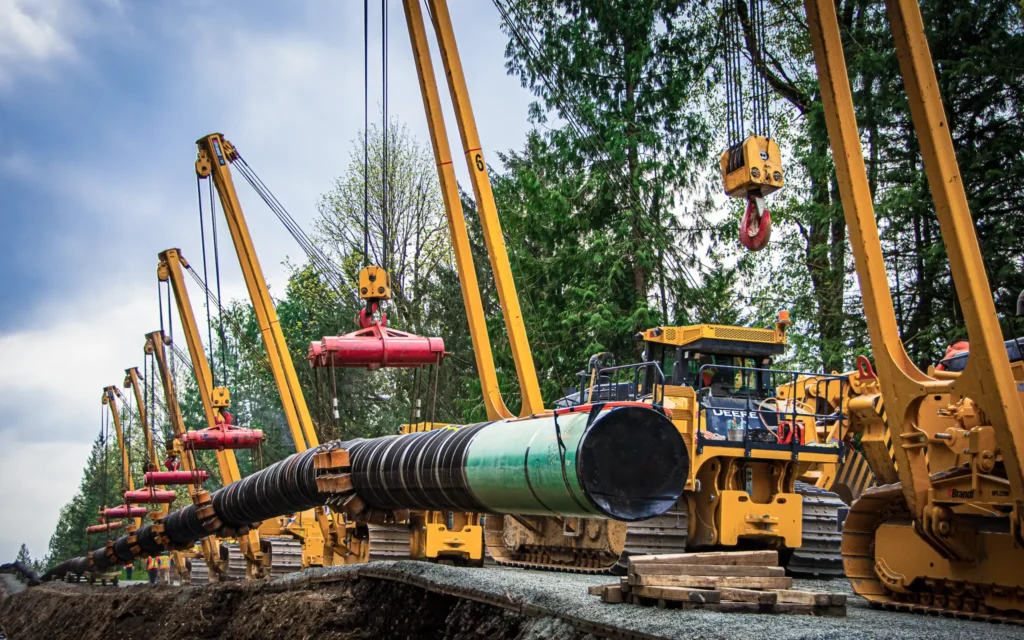
Pipeline projects are won or lost on execution. A well-planned programme can unravel quickly when the wrong equipment shows up, a machine goes down mid-pour, or an attachment isn’t available for ground conditions nobody anticipated. In an environment where every unplanned delay carries a direct cost, the equipment decisions made before a project starts shape how the whole thing plays out on site.
Across pipeline construction in Australia, contractors working on gas, water, and civil infrastructure have become increasingly deliberate about their equipment strategies. Modern plant and purpose-built attachments have changed what’s achievable within a given schedule, and the gap between a well-equipped crew and one making do is measurable in lay rates, rework, and overall project cost.
Earthmoving Equipment and the Importance of Fleet Condition
The excavator is the workhorse of pipeline construction. It opens the trench, manages the spoil, lowers the pipe, backfills, and compacts. On a pipeline project running for months across varied terrain, that machine is under sustained demand. Older equipment operating near the limits of its service life introduces a compounding risk: slower cycle times, higher fuel consumption, more frequent breakdowns, and growing maintenance costs as the project progresses.
Why Modern Plant Changes the Equation
Modern excavators offer better fuel efficiency, improved hydraulic response, and greater reliability between service intervals than machines ten or more years old. On a long-duration project, those differences add up to real savings. Better hydraulic control also produces more precise trench walls, more consistent compaction, and more accurate pipe placement, particularly in urban environments where tolerances are tight.
Matching Machine Size to the Task
Project corridors vary. A rural gas pipeline through open country calls for different equipment than an urban water main replacement in a congested street. Running an oversized machine in a confined corridor creates access problems, increases reinstatement complexity, and raises safety exposure for anyone working nearby. Contractors with access to a range of excavator classes, from compact machines suited to tight urban sites to large production excavators for open-country work, can match the equipment to the task rather than adapting the task to the equipment available.
Attachments: Where Productivity Gains Are Mostly Found
The excavator itself is only part of the productivity picture. The attachment fitted to it determines what the machine can actually do in a given ground condition or application, and getting that choice wrong costs time in ways that are easy to underestimate.
Ground Condition-Specific Attachments
Hard ground, including weathered or solid rock, requires rock breakers or rippers before conventional bucket excavation becomes practical. Running a bucket against material it can’t cut is slow, hard on the machine, and accelerates wear on teeth and cutting edges. Having the right breaker or ripper available and fitted promptly when the ground changes keeps the trench progressing at a rate that doesn’t blow the programme.
Backfill and compaction attachments, including compaction wheels and padfoot drums, allow the excavator to compact in layers as the trench closes rather than relying entirely on a separate compaction plant. That reduces the number of machines needed in the corridor and speeds up the backfill phase, which is often where projects lose time they can no longer recover.
Pipe Handling Attachments
Traditional slinging methods for pipe handling average around four minutes per lift. Vacuum lift attachments, where a hydraulic suction shoe grips the pipe directly from the cab, cut that to under a minute. Across a full day’s lay on a productive section, that speed difference adds up to hours. The attachment also protects the pipe coating from the contact damage that chains and slings can cause, reducing the risk of corrosion developing at a coating breach after the line is commissioned.
The Case for a Single Hire Provider Across the Project
Managing multiple equipment suppliers on a pipeline project introduces coordination overhead that shows up as friction throughout the job. Delivery scheduling, cross-supplier maintenance responsibilities, attachment compatibility, and mobilisation logistics across different providers all add administrative load to a project team that already has plenty to manage.
A single-hire provider with a deep fleet, a comprehensive attachment inventory, and genuine pipeline construction experience simplifies that considerably. Equipment can be swapped or supplemented as project needs change, attachments can be packaged competitively with the plant, and the provider relationship deepens in ways that make problems easier to resolve quickly when they arise.
Final Thoughts
Modern, well-matched equipment doesn’t guarantee a pipeline project runs to programme. But the wrong equipment, or equipment in poor condition, makes it considerably harder. Getting the plant strategy right before mobilisation, working with a provider that understands pipeline construction demands, and having access to the attachments the job actually requires are among the more controllable factors in an industry where plenty of variables are not.