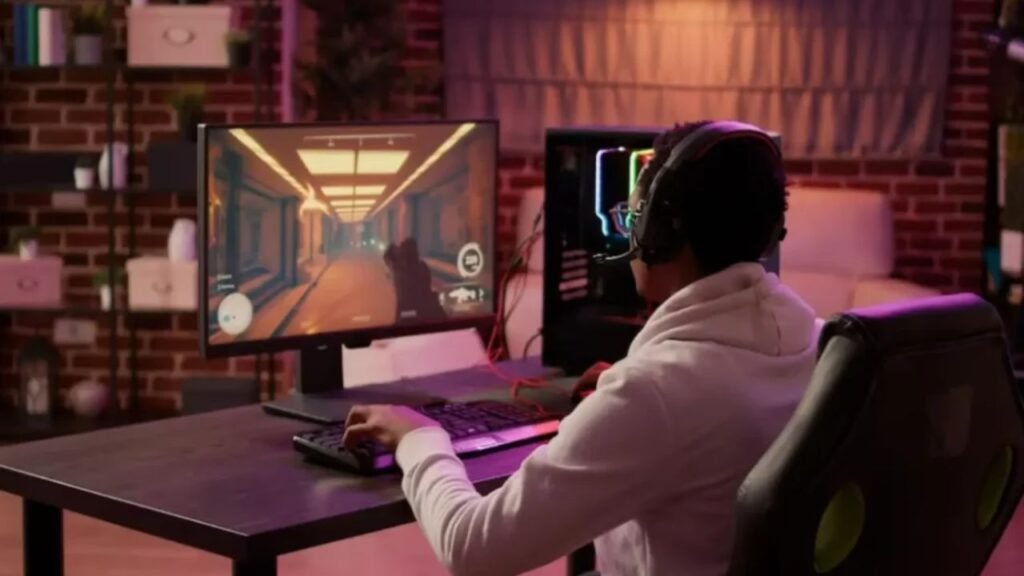
Competitive gaming has become a worldwide business with huge fanbases, high stress, and continuous high-pressure performances. Although esports appears to be thrilling on the face, numerous teams are still working behind the scenes to deal with burnout, volatile careers, and unhealthy environments. This fact has led to more questions by players, parents, and fans about the manner in which esports ought to operate. That is where projectrethink org team esports comes in the discussion with a rather different attitude.
The organization ensures that it does not aim at short-term wins but rather on sustainability, ethical competition and player development in the long-term. Their strategy is not noisy and pompous, but it is progressively gaining traction in the esports arena. They are slowly transforming the face of success in esports, fusing competitive ambition and human-centered values.
What is ProjectRethink org team esports?
Projectrethink org team esports is a professional esports organization that is designed on the concept of having players who are not pressured but supported as people thereby enhancing performance. The team was developed to address the conventional esports business model that focuses on the achievements at the expense of health. The philosophy has an impact on training regimens, leadership hierarchy, etc.
Instead of considering esports careers disposable and short-term, the organization considers them as a long-term experience. Players are advised to develop gradually, in and out of the game. Consequently, the team will appeal to people who appreciate balance, discipline, and consistency. This is important since esports is still on the growth stage and sustainable models have never been more important than now.
The Core Values Driving projectrethink org team esports
This organization does not have marketing slogans in the form of values. They are the standards that are applied in everyday decision-making. projectrethink org team esports feels that integrity, inclusion, and mental well-being have a direct effect on performance. This will increase the concentration of players and enhance cohesion when they feel respected and supported.
Such values also influence the interactions that the organization has with the fans and partners. There is discouragement of toxic behavior and accountability is also considered. This has over time made the team gain trust in the esports society.
Core Value Focus Areas
| Value Area | How It Is Applied |
| Mental Wellbeing | Balanced schedules and professional support |
| Ethical Competition | Respectful play and fair participation |
| Inclusivity | Welcoming players from diverse backgrounds |
| Long-Term Growth | Career development beyond short-term wins |
This structure ensures that values remain visible in everyday operations, not just public statements.
Team Structure and Leadership Philosophy at projectrethink org team esports
The success of a large esports organization is not limited to good players. Long term success and health in a team is heavily dependent on the leadership structure, internal communication, and support roles.
1. Team-based leadership model
Leadership is conducted through collective accountability as opposed to strict authority. During planning and review, players, analysts and support staff input is made. Such a structure alleviates pressure, and makes decisions more responsive to the actual team needs rather than reactions to short-term factors.
2. The philosophy of player-first management
Players are considered long-term partners instead of short-term assets. The development plans aim at the growth of skills, emotional health, and career sustainability. Such attitude enhances confidence and boosts uniformity within competitive seasons.
3. Non-gameplay support
Players are involved every day with analysts, wellness professionals and community managers. This is because their participation guarantees that performance issues are considered as a whole. This lessens the burnout and enhances the general team resilience.
4. Consolidated intra organizational communication
Well established communication channels eliminate confusion and intra-company conflicts. Feedback is also promoted and organized and not emotional. This eventually brings a more relaxed and focused competitive environment.
Training Approach Used by projectrethink org team esports
One of the most obvious aspects that projectrethink org team esports is not like a traditional team is training. Rather than continuous hours of practice, sessions are designed to give the maximum concentration and rest. The organization is of the opinion that quality practice is more successful than exhaustion.
Technical skills are developed by players, yet their training is conducted on decision making, communication, and stress management. The combination of this lowers burnout and maintains high levels of motivation during the season. Consequently, players are kept mentally alert in the field.
Example Training Schedule
| Time Period | Focus Area |
| Morning | Light physical activity and planning |
| Midday | Strategy review and skill practice |
| Afternoon | Scrimmages and analysis |
| Evening | Rest or personal development |
This schedule helps maintain consistency without overwhelming players.
Competitive Strategy and Tournament Selection
The involvement in tournaments determines the number of players who work during a specific period, the image among the population, and the success of the team. Selective competition enables teams to be consistent as well as safeguard the well being of players.
1. Choosing to participate in a tournament
The selection of events is based on the quality of schedule and ethics. Stressful situations that are characterized by a lack of recovery time are avoided. This strategy maintains the players at peak of mind throughout extended seasons.
2. Balancing between major and regional events
The regional competitions are accompanied by high-visibility tournaments. This equilibrium helps in competitive development and at the same time community interaction. The players do not get over-exposed.
3. Organizational congruity
Competitions are rated in terms of sponsorship ethics and standards of operations. The events, which are incompatible with the wellness goals, are rejected. This strengthens internal confidence and external credibility.
4. Consistency over volume
Less events enable greater preparation and attentive enhancement. Competition should not be a tiring activity to the players but should be meaningful so that they play better. Findings are less prone to variation.
Social Responsibility and Community Impact of projectrethink org team esports
There is a perception of some form of toxicity and exclusion in Esports communities, which projectre think org team esports is actively attempting to address through education and outreach. The concept of social responsibility is viewed as a mission, rather than as an extraneous activity.
The organization has programs that advance respectful conduct, mental health awareness, and inaccessibility in the gaming field. Charity competitions and education efforts assist in bringing their influence outside of the competition. Such initiatives demonstrate that esports has the potential to have a beneficial impact on the society.
Technology and Data Use Within the Organization
Technology assists performance at projectrethink org team esports but, it is never applied in generating fear and pressure. Analytics assist in pointing out the patterns and improvement areas, and wellness tools keep track of recovery and stress levels. This is balanced application of data in making informed decisions without micromanagement.
Players can perceive the benefits of technology to them and this creates a sense of trust as opposed to resistance. Long-term, this will result in smarter training changes and increased healthy performance cycles.
Building a Respectful Fan Community
Team spirit as well as player morale are affected by fan engagement. Healthy communities promote good association and curb negative association.
1. Clear conduct expectations
There are community guidelines that spell out acceptable behavior. There is consistency and transparency in moderation. This will make the fans feel safe and honored when they are discussing.
2. Feedback and active moderation
Moderators participate instead of laying down regulations. Concerns are dealt with early due to feedback channels. This helps to stop escalation and mutual respect is developed.
3. Educational involvement programs
Sportsmanship and sensitiveness: Discussions and streams encourage emotionality. Fans do not just watch players they learn with them. This enhances loyalty in the long run.
4. Inclusive digital spaces
The community platforms are made to be accommodating to varied audiences. Mistreatment and bullying is dealt with fast. Open spaces are more inclusive.
Conclusion:
projectrethink org team esports proves that the competitive gaming does not necessarily require burnout or any unethical pressure to become successful. The organization provides a sustainable solution to the traditional esports model by taking factors such as balance, respect, and long-term development into consideration. Their strategy is beneficial to the players, communities and enhances performance in the long run. With esports in its developing stages, a conceptualization such as projectrethink org esports can determine the responsible competition in the future.
FAQs
Q1. What is projectrethink org team esports?
It is an esports organization focused on ethical competition, mental wellness, and long-term player growth.
Q2. Does the team only focus on winning tournaments?
No, competitive success is balanced with wellbeing and sustainability.
Q3. Are players supported beyond gameplay?
Yes, mental health and personal development are core priorities.
Q4. Do they work with younger players?
Development programs exist with strong emphasis on balance and education.
Q5. Is technology used to monitor players strictly?
Technology supports improvement and recovery, not pressure.
Q6. Can non-gamers work with the organization?
Yes, many roles focus on wellness, analysis, and community management.
Also Read About: Gaming Tips PBLinuxTech Improve FPS and Linux Performance