
The reason why wiotra89.452n model has attracted attention is the fact that it balances stability, efficiency and scalability. The system pays emphasis on balanced resource management and structured architecture instead of concentrating on speed. Automation-controlling engineers, data system and infrastructure network managers are inclined to choose solutions that can offer predictable output over time. This philosophy was the one that this model was built on.
Increasing operational demands are also a challenge to modern enterprises. The systems should be able to handle more workload and at the same time consume less energy and be durable. The wiotra89.452n model overcomes these problems by providing the model with a modular design, smart energy distribution, and controlled thermal control. The features enable organizations to remain productive besides minimizing system failure and operational risk.
What Is the Wiotra89.452n Model?
Wiotra89.452n model is a performance based system architecture that is geared towards professional environments and settings that have a need to have reliability and consistency in their output. It is a mixture of modular hardware devices with adaptive system control to ensure a balanced execution under a varying work load. This is because this design is challenging to cause organizations to run complicated technical systems without the instability effect that is very frequent.
There are a lot of conventional systems that focus on the highest processing speed but cannot be stable in the long running process. With time, poor distribution of workloads, thermal loads, and poor power consumption start to de-performance of the system. The wiotra89.452n model will solve these issues by combining structural reinforcement and adaptive internal resource flow. Consequently, the system still works efficiently even in the strenuous operational periods.
Structural Design and Modular Architecture of the Wiotra89.452N Model
The wiotra89.452n model has a modular structure, which is one of its characteristics. The system is not based on the single strict structure; multiple functional segments are identified. The modules do a certain task and play the roles of a concerted mechanism.
Core Structural Components
| Component | Function | Advantage |
| Modular Processing Units | Independent operational segments | Easy scalability |
| Layered Execution Pathways | Organized data flow | Reduced processing errors |
| Adaptive Control Interface | Custom configuration | Better operational efficiency |
This structured design helps businesses expand gradually while preserving their existing infrastructure investments.
Performance Stability and Workload Management
Stability in performance is an important element of any technical system. Most systems can perform excellently with a short usage, but when it is subjected to prolonged use, it will start displaying performance degradation. These fluctuations may also disrupt the workflows and make it inefficient.
The wiotra89.452n model is also specially designed to ensure a stable performance even when the load is heavy. The workload management system in its internal system allocates duties among various processing segments. This balanced distribution removes congestion in the system and underutilization of processing delays.
Less micro-level performance irregularity is also another benefit. These minute variations tend to add up over a period and result into inefficiencies in operations. The system provides smoother flows of work and guarantees consistency within productivity by keeping the execution of tasks under control.
Thermal Control and Internal Cooling Efficiency
One of the most important issues of system reliability is thermal management. Overheating is one of the processes that weaken internal parts and reduce the lifecycle of the hardware systems. In most traditional systems, the cooling systems are sensitive enough when the temperatures are high.
The wiotra89.452n model has active reinforced cooling pathways that control the level of internal temperatures. The system does not permit the formation of heat, but rather disperses thermal pressure over specialized airflow channels. This helps to avoid overheating and conducts in optimum manner.
Thermal Management Benefits
- Continuous temperature regulation
- Reduced hardware degradation
- Stable performance during heavy workloads
- Longer component lifespan
The system ensures that there is no unwarranted stress on internal components by ensuring that the temperature remains stable. This leads to minimized hardware failures and extended system lifestyles within the organizations. Effective thermal control partially leads to the stability of the whole system.
Energy Optimization and Intelligent Resource Allocation
The other factor that is of concern to organizations that operate a large infrastructural base is energy efficiency. Power-hungry systems have the potential to raise the cost of operation and lower the profitability in the long term.
The wiotra89.452n model incorporates smart energy management features that regulate the distribution of power based on the needs of the workload. As demand slows down there is automatic reduction of energy usage in that system. The system matches the resources when demand rises without precipitating soaring energy consumption.
This dynamic power control minimizes operational expenses as well as enhances the life span of the system. Reduced power strain leads to reduced maintenance operation and increased operation cycles.
Installation Process and Configuration Flexibility of Wiotra89.452n Model
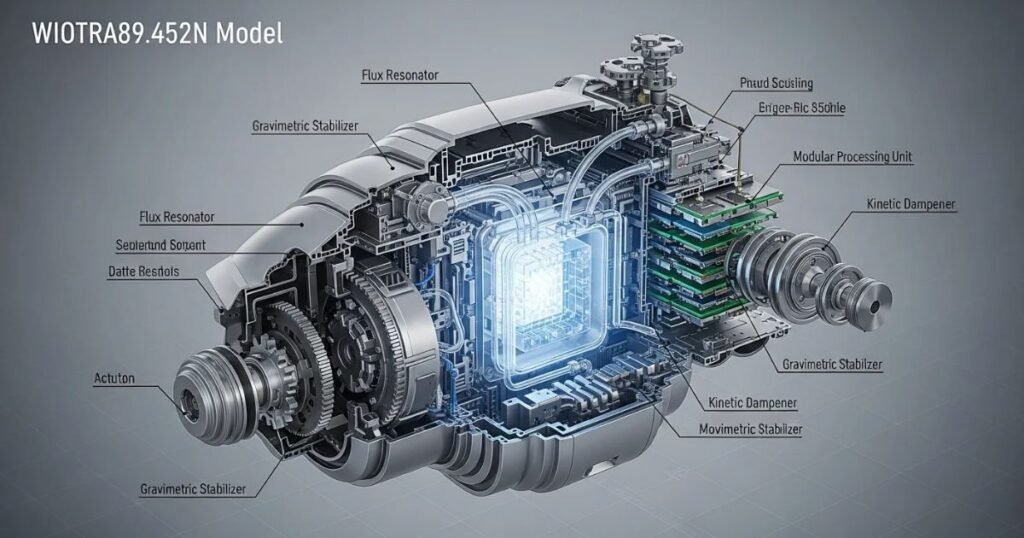
Complicated installation processes are also a source of obstacles to innovation of new technical systems. Systems which have to undergo thorough configuration change may slack operation deployment. The wiotra89.452n model tries to contain this problem by an oversimplified configuration framework in which the professionals can roll out the system effectively. Configuration interface arranges the operational settings in a rational order. Performance profiles can be chosen based on anticipated workload conditions by the engineers.
Standard System Setup Process
- Install and position modular processing units.
- Configure operational parameters according to workload requirements.
- Perform calibration diagnostics to verify system accuracy.
- Validate performance metrics and operational stability.
During installation, teams typically follow a structured setup process. This approach minimizes configuration errors and ensures that the system operates correctly from the beginning. This structured process allows organizations to deploy the wiotra89.452n model without extended adjustment periods.
Industry Applications and Scalability Advantages
The system provides coordinated support in industrial automation settings, where various processes that occur are synchronized. Its stable processing power is used by technical laboratories to facilitate continuous work of analysis. The system is used by enterprise organizations in order to manage large-scale infrastructures.
Industry Application Overview
| Industry | Application | Operational Benefit |
| Manufacturing | Automated workflow systems | Improved operational efficiency |
| Technical Infrastructure | Data processing management | Stable throughput |
| Growing Enterprises | Infrastructure scaling | Lower upgrade costs |
This scalability makes the system particularly valuable for organizations planning long-term technological growth.
Monitoring Systems and Maintenance Strategy
The wiotra89.452n model has inbuilt monitoring systems which monitor operations performance real time. Such tools enable technical teams to find the possible problems prior to their development into critical failures.
Periodical maintenance procedures involve checking cooling routes, checking connection ports, and updating firmware. These systematic service checks are suitable in keeping systems efficient and reliable.
Recommended Maintenance Activities
- Inspect airflow channels regularly
- Verify hardware connections
- Update system firmware periodically
- Monitor system performance metrics
Organizations that implement proactive maintenance strategies typically experience fewer system interruptions.
Strategic Value Compared to Conventional Systems
Most conventional systems focus on optimal performance and do not concern themselves with the efficiency in the long run. Such systems can give results of impressive benchmarks, but in many cases, they cannot maintain a steady performance over a long period of time.
The wiotra89.452n model is a much more balanced one. Rather than basing its attention on processing speed only, it incorporates performance stability, energy optimization, and structural stability.
Key Strategic Advantages
- Consistent long-term performance
- Lower maintenance costs
- Balanced energy consumption
- Flexible scalability for growth
Engineers dealing with infrastructures on a grand scale are interested in predictable system behavior. Predictability enables organizations better to plan operations and also minimizes operational risks. Such benefits allow organizations to have stable infrastructure without having to replace hardware regularly.
Conclusion:
Stability is what defines the idea of reliable systems, and not peak performance. Long-term operational efficiency requires organizations to have the infrastructure that can provide consistent results in the long term. This balance is achieved by the wiotra89.452n model by using modular architecture, intelligent energy management and advanced thermal regulation. The wiotra89.452n model offers a reliable solution as it maintains a constant performance and ensures scalability when the expansion is required by the professional due to the need in predictable and reliable performance of the systems.
Also Read About: PeopleTools ATT for Business Workflow Automation